Cyrus Kiani
Founder / CEO



US-based vs Offshore teams: Best Fit For Your App
Most startup founders assume offshore development automatically means lower costs and faster launches. That assumption has burned a lot of companies. The real equation involves project complexity, team structure, communication overhead, and IP exposure, and getting it wrong can cost you months of rework. Success depends on variables like project scope, team culture, and risk tolerance, not just hourly rates. This guide breaks down exactly what each model delivers, where each one fails, and how to match your specific app project to the right team.
Key Takeaways
Point | Details |
|---|---|
Assess your project scope | Projects with locked specifications may benefit from offshore, but evolving needs favor US-based teams. |
Security and IP risks | US-based teams reduce legal ambiguity and ensure stronger intellectual property protection. |
Don’t rely on cost alone | Lower hourly rates offshore rarely capture true total project costs or risk factors. |
Vetting is critical | Thoroughly assess teams using platform scores, trial projects, and legal safeguards before choosing. |
Understanding the strategic choice: US-based vs offshore teams
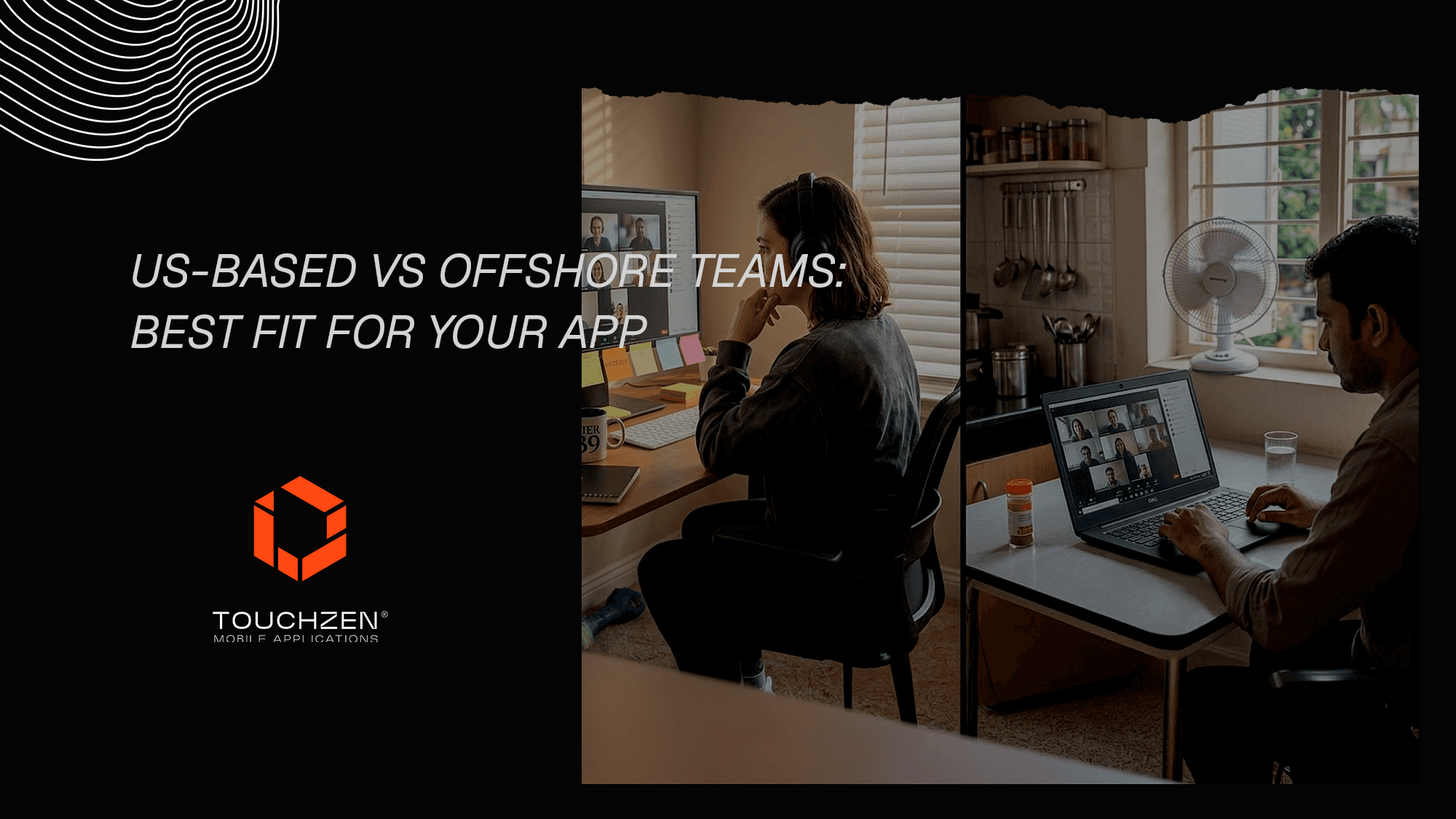
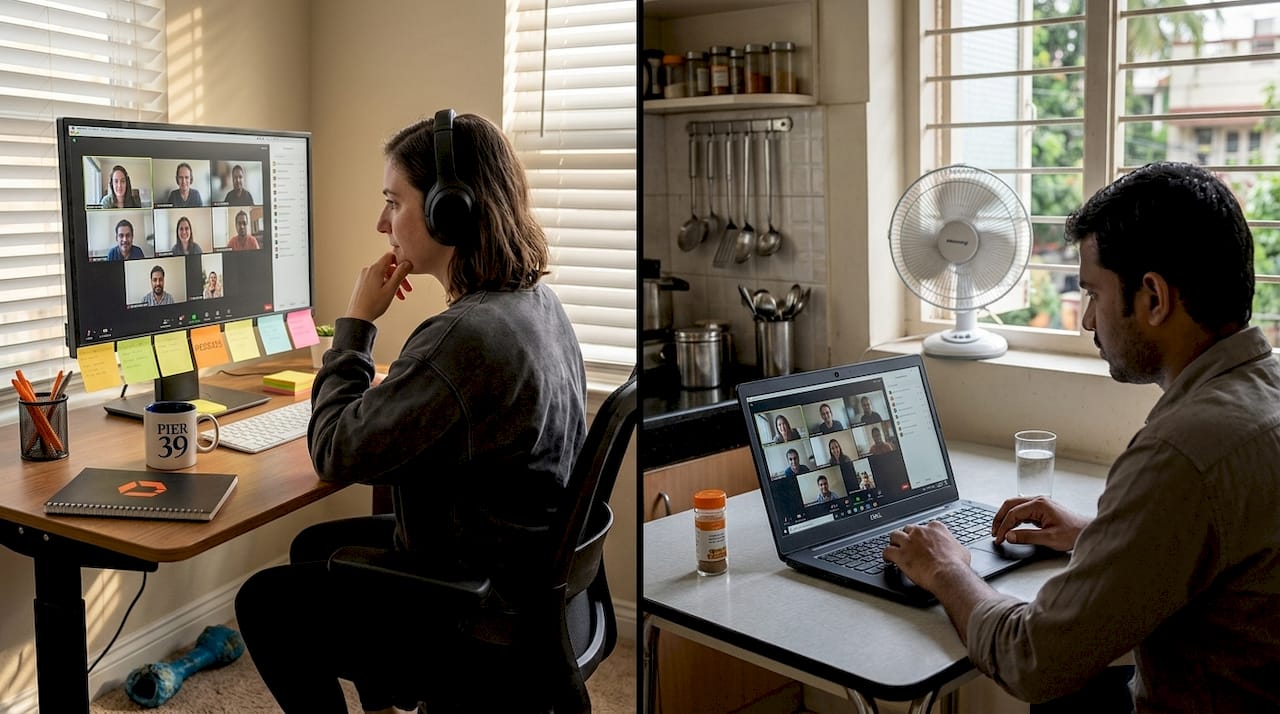
Let's get the terminology straight. A US-based team is a development agency or group of engineers operating within the United States, subject to US law, working in your time zone, and typically communicating in native English. An offshore team operates in a different country, often in Asia, Eastern Europe, or Latin America, with lower labor costs but meaningful differences in time zone, culture, and legal jurisdiction.
For startups, the choice between these two models shapes more than your budget. It affects how fast you can iterate, how clearly your vision gets translated into code, and how protected your intellectual property is from day one. The primary drivers founders weigh include:
Cost: Offshore rates can be 40 to 70 percent lower on paper
Control: US-based teams allow real-time collaboration and faster course correction
Speed to market: Proximity reduces feedback loops and miscommunication delays
Quality: Talent quality varies widely in both models, but vetting is easier domestically
IP protection: US contracts are enforceable under familiar law
The decision you make early shapes your product's long-term health. Switching models mid-project is expensive and disruptive. Working with top IT consultants who understand both models can help you avoid costly pivots.
"Offshore teams excel for well-scoped, repeatable maintenance work but face risks in edge cases such as IP security and cultural misalignment."
The strategic implication is clear: offshore works when the work is predictable. US-based teams earn their premium when the work is exploratory, iterative, or legally sensitive.
Comparing benefits and risks: A side-by-side analysis
Here is a direct comparison across the factors that matter most to startup founders building mobile or web apps.
Factor | US-based team | Offshore team |
|---|---|---|
Hourly cost | $100 to $200+ | $25 to $75 |
Communication | Real-time, native English | Async, potential language gaps |
Time zone | Aligned | 8 to 12 hour difference |
Iteration speed | Fast | Slower without overlap |
IP risk | Low, US law applies | Higher, jurisdiction varies |
Talent vetting | Easier, references accessible | Harder, requires due diligence |
Cultural fit | Strong | Variable |
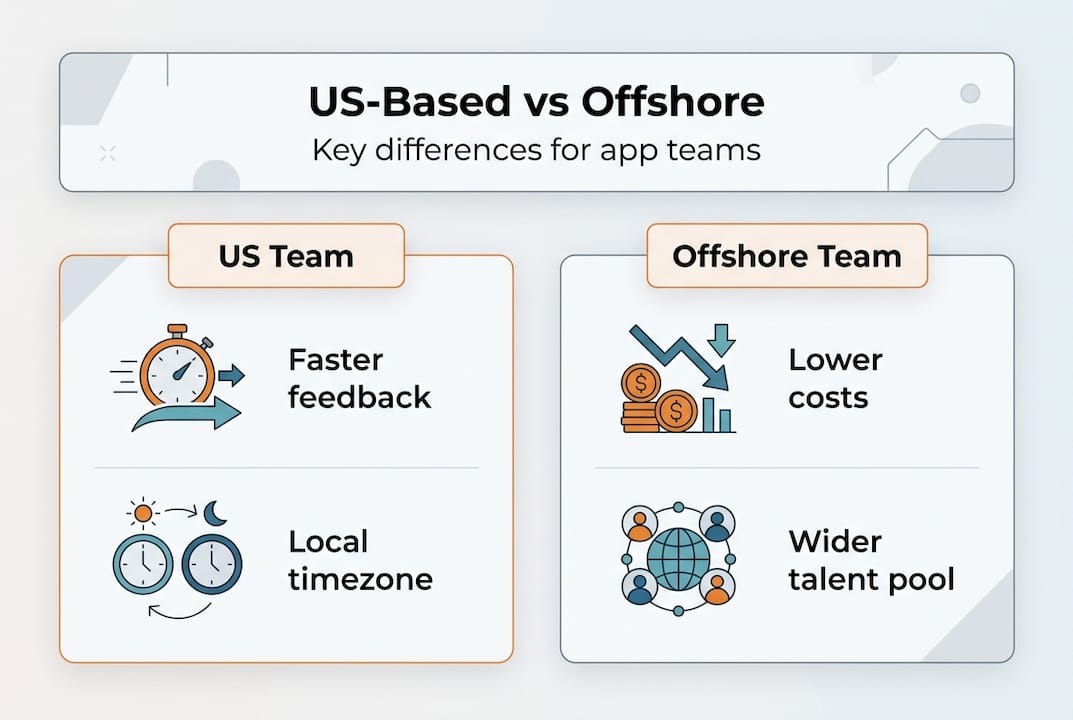
The cost gap is real, but so is the risk gap. Offshore requires well-defined specs; US-based teams offer more room for quick iteration and feedback. That distinction matters enormously for early-stage startups where the product vision is still evolving.
When offshore works best:
Legacy system maintenance with locked specifications
Repetitive backend tasks or QA testing
Projects with a fixed scope and no expected pivots
Cost-sensitive phases after product-market fit is confirmed
When US-based teams win:
MVP development where the spec will change weekly
Apps in regulated industries like health, finance, or insurance
Projects requiring tight IP control or NDA enforcement
Scaling phases where design and engineering must stay in sync
Studies on software project failures consistently point to poor spec definition and communication breakdowns as leading causes of budget overruns. Agencies listed among the best Orange County app agencies and top app developers USA typically build structured discovery processes that prevent these failures before a single line of code is written.
Key risk areas: Security, legal, and cultural factors
IP security, cultural misalignment, and political instability are the top offshore risks that startup founders underestimate until they are already exposed. These are not theoretical concerns. They are documented failure patterns that have derailed funded startups.
Before engaging any offshore team, work through these steps:
Sign a jurisdiction-specific NDA that is enforceable in both countries, not just a generic template
Add IP assignment clauses to your contract that explicitly transfer all work product to your company
Audit the vendor's data security practices, including how they store code, credentials, and client data
Research the country's political and legal stability, particularly for long-term engagements
Run a paid trial project of two to four weeks before committing to a full engagement
Check independent platform scores on Clutch or similar sites, targeting ratings above 4.5 with verified reviews
Legal complexity is often underestimated. Enforcing a contract against a vendor in a foreign jurisdiction can cost more than the project itself. Reviewing app security tips specific to startup environments can help you build a security checklist before you sign anything.
Cultural misalignment shows up in subtle ways: different assumptions about deadlines, different standards for "done," and different comfort levels with pushing back on unclear requirements. These gaps compound over time.
Pro Tip: Before committing to any offshore vendor, assign a small, paid discovery task with a clear deliverable. How they handle ambiguity, communicate blockers, and deliver on time tells you more than any sales call. Cross-reference their profile on top design agencies USA directories for independent validation.
"AI impact on remote teams is real, but it reduces communication friction, not the underlying risks of IP exposure or misaligned expectations."
How to choose the right model for your startup's app project
Your project characteristics should drive the decision, not the budget alone. Use this table to map your priorities to the right model.
Startup priority | Recommended model | Reason |
|---|---|---|
Speed to MVP | US-based | Fast iteration, real-time feedback |
Lowest upfront cost | Offshore | Lower hourly rates |
Tight IP control | US-based | Enforceable contracts, familiar law |
Fixed-scope backend work | Offshore | Well-defined tasks reduce risk |
Regulated industry app | US-based | Compliance expertise, accountability |
Post-launch maintenance | Offshore | Predictable, repeatable tasks |
Design-heavy product | US-based | Closer collaboration on UX decisions |
AI tools reduce team gap in some areas, but project complexity and desired control still dictate which location fits best. AI can help bridge async communication, but it cannot replace the judgment calls that happen in real-time design reviews or rapid product pivots.
Pro Tip: A hybrid model can work well for scaling startups. Use a US-based team for product strategy, design, and core feature development, then bring in offshore resources for QA, data processing, or non-critical backend tasks. This keeps your IP and product vision protected while managing costs.
Before signing with any vendor, ask these questions:
Who specifically will work on my project, and what are their individual credentials?
How do you handle scope changes mid-sprint?
What is your process for escalating blockers or missed deadlines?
How do you protect client IP, and what jurisdiction governs our contract?
Can I speak directly with the developers, not just a project manager?
Working with top UX designers USA or connecting with app experts who have built products in your industry can shortcut months of trial and error.
Success stories: Real-world outcomes of US-based and offshore teams
Abstract comparisons only go so far. Here is what these decisions look like in practice.
Health tech startup, US-based team: A seed-stage company building a patient intake app chose a US-based agency for their MVP. The team iterated through three major design pivots in eight weeks, responding directly to user testing feedback. The app launched on schedule and passed HIPAA compliance review on the first submission. The founders credited direct access to senior developers as the key factor.
E-commerce platform, offshore team: A bootstrapped founder used an offshore team to build a product catalog and order management backend. The scope was fully defined before development started. The project came in 35 percent under a comparable US quote and delivered on time. The founder noted that any scope change required a formal change order, which slowed things down but kept costs predictable.
Fintech startup, offshore team (cautionary): A Series A company outsourced their mobile app to an offshore vendor without a proper IP assignment clause. When they tried to switch vendors 18 months later, a dispute over code ownership delayed their next funding round by four months.
Offshore quality varies and should be vetted through Clutch scores and trial projects before any long-term commitment.
"The most expensive development decision is not the hourly rate. It is the cost of rebuilding what was built wrong the first time."
The pattern across successful engagements is consistent: match the team model to the project's actual characteristics, not the budget wishlist. Founders who worked with top US app developers or vetted Orange County app developers through independent platforms consistently reported fewer surprises and faster time to market.
Partner with a proven US-based app development team
If your app project involves frequent iteration, sensitive user data, or a product vision that is still taking shape, the risk of offshore misalignment is real and measurable. The case studies above show what happens when the model fits, and what it costs when it does not.
TouchZen Media is a US-based app development agency in Orange County, California, recognized among thetop app developer California firms and top app developers USA on independent platforms. We work directly with startup founders and growing companies to design, build, and scale mobile and web applications with full transparency and no handoff to junior teams. Schedule a no-obligation discovery call to get a clear-eyed assessment of your project scope, timeline, and the right team model for your goals.
Frequently asked questions
What are the main cost differences between US-based and offshore development teams?
Offshore teams often deliver lower hourly rates but may generate hidden costs through extra project management, rework, or timeline delays. Offshore best suits well-scoped maintenance work, where edge case risks are lower.
How can I vet the quality of an offshore development team?
Check independent platform scores above 4.5, request a paid trial project, and use AI collaboration tools to bridge workflow gaps. Offshore quality varies significantly, so structured vetting is non-negotiable before a full engagement.
What are the top legal and security risks with offshore teams?
Intellectual property protection, data jurisdiction, and foreign legal enforcement are the top challenges. Tightly scoped contracts, IP assignment clauses, and jurisdiction-specific NDAs are critical safeguards. Top offshore risks include IP exposure, cultural misalignment, and political instability.
When is a US-based team the smarter choice?
When your project requires frequent iteration, rapid pivots, tight IP control, or industry-specific compliance, US-based teams offer superior alignment. Nearshore and US teams handle evolving specs far better than offshore models built for locked requirements.