
Cyrus Kiani
Founder / CEO




Key takeaways
Point | Details |
|---|---|
Custom apps are uniquely built software designed to meet specific startup needs and workflows | Unlike generic off-the-shelf solutions, custom development delivers tailored functionality aligned with your business goals |
Structured development processes ensure successful outcomes | Following phased approaches from discovery through deployment minimizes risk and keeps projects on track |
Technology choices directly impact performance, cost, and scalability | Understanding native, hybrid, and web app trade-offs helps founders make strategic decisions |
Expert partnerships accelerate innovation and reduce development risks | Transparent communication with experienced developers prevents common pitfalls and ensures alignment |
Real-world startup success stories validate the custom app approach | Proven case studies demonstrate measurable results in user growth, engagement, and market differentiation |
Introduction to custom app development
Custom app development means building software uniquely tailored to your startup's goals rather than adapting generic tools. This approach creates digital products that precisely match your workflows, user needs, and competitive positioning. Off-the-shelf software offers broad functionality but forces you to compromise on features, integrations, and user experience that define your value proposition.
For startups, these tailored solutions prove critical when standard software cannot accommodate industry-specific requirements or innovative business models. Custom development enables you to rapidly prototype minimum viable products, iterate based on real user feedback, and scale features as your market presence grows. The flexibility to pivot quickly without software constraints often determines whether early-stage companies capture opportunities or lose momentum.
Startups commonly leverage custom apps for several strategic purposes:
Building MVPs that test core hypotheses with minimal investment
Scaling products as user bases grow and feature complexity increases
Creating industry-specific functionality that differentiates from competitors
Integrating proprietary systems and data sources seamlessly
Delivering superior user experiences that drive retention and growth
Choosing top app developers who understand startup dynamics ensures your development partner can balance speed, quality, and budget constraints effectively. The right team brings technical expertise alongside business acumen, helping you make technology decisions that align with go-to-market strategies and funding realities.
How custom apps drive startup innovation and growth
The shift toward custom development reflects fundamental changes in how startups achieve product-market fit. Recent data shows 44% of startups prioritize custom app development as their primary strategy for competitive differentiation, recognizing that unique software capabilities create defensible market positions. Generic solutions cannot deliver the specialized features and experiences that define breakthrough products.
Custom apps impact startup success through several measurable channels. Product-market fit accelerates when software precisely addresses target user pain points without unnecessary features that dilute value propositions. Competitive edges emerge from capabilities competitors using standard tools cannot replicate quickly. Market responsiveness improves dramatically when development teams can implement feature changes in days rather than waiting for vendor roadmaps.
Consider how customization unlocks innovation:
Personalization engines that adapt experiences based on individual user behavior patterns
Advanced analytics integrations providing real-time insights for data-driven decisions
Workflow automations specific to niche industries or unique business processes
API connections linking proprietary systems competitors cannot access
Experimental features testing new monetization or engagement models
Custom development transforms constraints into advantages. Where off-the-shelf limits innovation, tailored software becomes the foundation for differentiation and rapid iteration.
The strategic benefits extend beyond features. User-centric design processes ensure every interaction optimizes for your specific audience rather than generic user bases. Flexibility to pivot remains crucial when market feedback demands direction changes that would require months of vendor negotiations with standard software. Scalability built into custom architectures prevents technical debt from constraining growth as user numbers and data volumes increase exponentially.
Partnering with top mobile app development companies accelerates these advantages through proven methodologies and technical depth. Research demonstrates that design thinking approaches boost engagement by 40% when applied systematically, validating the importance of expertise in translating business goals into compelling user experiences.
Step-by-step custom app development process
Successful custom app development follows a structured lifecycle that transforms concepts into market-ready products through deliberate phases. Understanding each stage helps founders manage expectations, allocate resources appropriately, and maintain project momentum.
Discovery phase defines the foundation. Development teams conduct workshops with stakeholders to document business objectives, user needs, technical requirements, and success metrics. This phase produces detailed specifications, user personas, feature prioritization, and project roadmaps that guide all subsequent work.
Design and planning translate requirements into blueprints. UX designers create wireframes, prototypes, and visual designs that map user journeys and interface interactions. Technical architects simultaneously define system architecture, technology stacks, database schemas, and integration approaches ensuring scalability and performance.
Agile development delivers working software incrementally. Development proceeds in short sprints producing testable features every few weeks. Continuous integration and automated testing catch issues early while regular demos keep stakeholders aligned and enable course corrections based on emerging insights.
Quality assurance validates functionality and user experience. Dedicated testing cycles verify features work correctly across devices, browsers, and usage scenarios. Performance testing ensures the app handles expected load while security audits protect user data and prevent vulnerabilities.
Deployment and launch move products to production. Careful release planning coordinates app store submissions, server infrastructure setup, monitoring configuration, and launch communications. Phased rollouts often start with limited audiences before expanding to full availability.
Ongoing maintenance sustains and evolves the product. Post-launch support addresses bugs, monitors performance metrics, implements security updates, and develops new features based on user feedback and business priorities.
Involving senior developers throughout the process proves essential for avoiding common pitfalls. Research confirms that detailed discovery workshops and close stakeholder communication prevent scope creep that derails timelines and budgets. Direct access to technical decision-makers enables rapid problem-solving and ensures architectural choices align with business strategies.

Pro Tip: Schedule weekly check-ins with your development team to review progress, address blockers, and validate that evolving features still serve core business objectives. This rhythm prevents misalignment before it becomes costly to correct.
Following proven web app design workflows can reduce costs by 60% through systematic approaches that eliminate rework and optimize resource allocation across phases.
Technology choices: native, hybrid, and web apps comparison
Selecting the right technology approach fundamentally shapes your app's capabilities, development timeline, and total cost. Three primary models serve different startup needs based on performance requirements, budget constraints, and go-to-market urgency.
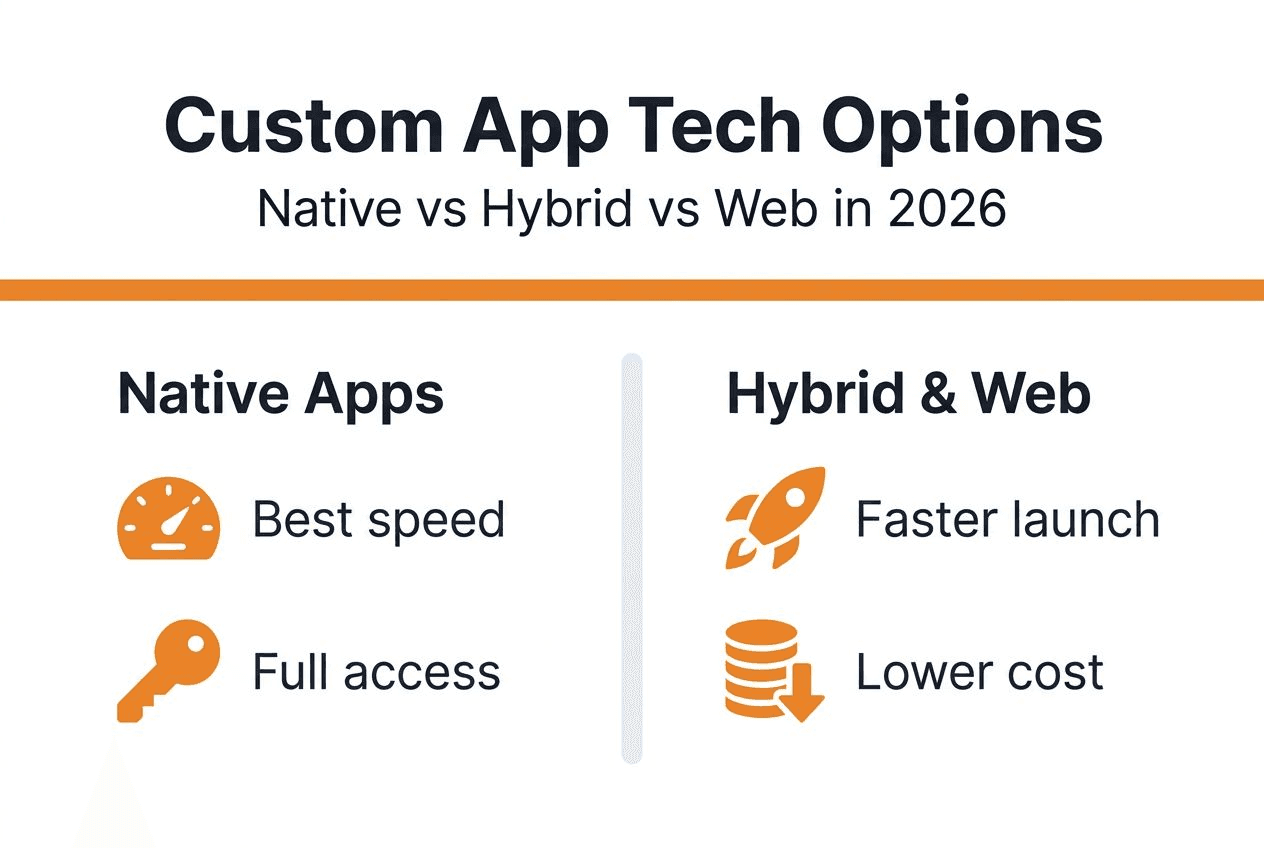
Native apps are built specifically for iOS or Android using platform-specific languages like Swift or Kotlin. They deliver superior performance, seamless device integration with cameras and sensors, and the best possible user experience through platform-native interfaces. Development costs run higher since separate codebases require specialized expertise for each platform. Native development suits startups prioritizing performance-intensive features, sophisticated animations, or deep hardware integration.
Hybrid apps use frameworks like React Native or Flutter to write code once and deploy across platforms. This approach balances cost efficiency with reasonable performance for most use cases. Development timelines shorten significantly compared to native while maintaining app store distribution and acceptable user experiences. Hybrid works well for startups needing cross-platform presence quickly without budget for separate native teams.
Web apps run in mobile browsers using standard web technologies, requiring no app store approval or installation. They enable the fastest prototyping and iteration cycles while reaching users immediately through URLs. However, performance lags behind installed apps and access to device features remains limited. Web apps excel for early testing, content-focused products, or situations where app store policies create barriers.
Approach | Performance | Cost | Timeline | Best For |
|---|---|---|---|---|
Native | Excellent | High | 6-9 months | Performance-critical apps, complex features, premium experiences |
Hybrid | Good | Medium | 4-6 months | Multi-platform launches, standard features, balanced budgets |
Web | Fair | Low | 2-3 months | Rapid prototyping, content delivery, testing concepts |
Key factors influencing your choice:
Performance needs: Games, media editing, or real-time features require native capabilities
Budget constraints: Startups with limited funding benefit from hybrid cost efficiency
Time-to-market pressure: Web apps enable fastest validation of core hypotheses
Platform priorities: If iOS represents 80% of target users, native iOS may justify focused investment
Feature requirements: Augmented reality, advanced sensors, or offline-first design favor native
Pro Tip: Start with hybrid or web to validate product-market fit quickly, then migrate performance-critical components to native as usage patterns and revenue justify the investment.
Recent trends show how AI-native mobile app development integrates machine learning capabilities across technology choices, with native apps offering superior performance while hybrid apps balance cost and speed, and web apps enabling rapid prototyping.
Common misconceptions about custom app development
Several persistent myths prevent founders from pursuing custom development despite its strategic advantages. Addressing these misconceptions directly helps you evaluate options based on reality rather than outdated assumptions.
Cost fears exceed actual investment requirements. Many founders imagine custom apps require hundreds of thousands of dollars upfront. Agile MVP approaches enable launching functional products for $50,000 to $100,000, focusing resources on core features that validate market demand before scaling investment. Iterative funding aligned with milestone achievements spreads costs across funding rounds rather than requiring massive initial capital.
Timeline concerns overlook agile acceleration. The belief that custom development takes 18 to 24 months stems from traditional waterfall approaches. Modern agile methodologies deliver working MVPs in approximately 3 months, with continuous releases adding features based on user feedback. This approach actually reaches markets faster than configuring complex off-the-shelf platforms.
Scalability worries assume technical limitations. Founders sometimes fear custom apps cannot handle growth, imagining they will need complete rebuilds as user bases expand. Properly architected custom solutions scale more effectively than generic software because infrastructure designs anticipate your specific growth patterns and data models from the start. Cloud-native architectures enable elastic scaling that adapts automatically to demand.
Complexity assumptions underestimate modern tools. Concerns about maintaining custom code overlook how current frameworks, DevOps practices, and documented architectures simplify ongoing development. Established codebases with automated testing and continuous integration actually prove easier to modify than navigating vendor dependencies and upgrade cycles with off-the-shelf products.
Additional myths worth clarifying:
Custom apps do not require massive in-house technical teams when partnering with experienced agencies
Modern development practices include comprehensive documentation preventing knowledge silos
Security in custom apps often exceeds off-the-shelf when developers follow current best practices
Integration capabilities with existing systems typically improve with custom development
Pro Tip: Request case studies and reference calls with previous clients to verify development partners deliver on timeline and budget promises. Transparent teams readily share realistic examples rather than optimistic projections.
Research confirms misconceptions about cost and timeline deter founders despite agile methods enabling fast, affordable delivery when teams apply proven methodologies systematically.
Practical guidelines and decision frameworks for startup founders
Translating custom app development knowledge into action requires systematic approaches for selecting partners, managing budgets, and avoiding common mistakes that derail projects.
Choosing the right development partner determines project success. Evaluate potential teams across several critical dimensions:
Relevant experience: Review portfolios showing successful projects in your industry or with similar technical complexity
Process transparency: Seek partners explaining methodologies clearly and providing regular progress visibility
Communication quality: Assess responsiveness, clarity, and willingness to educate during initial conversations
End-to-end capabilities: Verify teams handle strategy, design, development, and post-launch support rather than outsourcing key phases
Senior developer access: Confirm you will work directly with experienced architects, not just junior implementers
Reference validation: Contact previous clients to verify on-time delivery, budget adherence, and ongoing satisfaction
Budget management requires realistic planning and contingency preparation. Apply these strategies:
Define MVP scope rigorously to focus initial investment on features proving core hypotheses
Request itemized estimates breaking costs into phases, features, and optional enhancements
Include 20% contingency for scope refinements and unforeseen technical challenges
Plan iterative funding aligning development phases with fundraising milestones
Track burn rate weekly comparing actual spending against budgeted allocations
Risk mitigation follows proven patterns. Sequential strategies that prevent common failures:
Conduct thorough discovery before committing to full development, investing 10-15% of budget in detailed planning
Establish clear success metrics and acceptance criteria for each development phase
Insist on working software demonstrations every two weeks rather than waiting for final delivery
Maintain ownership of code repositories and technical documentation from day one
Plan gradual transitions between development phases instead of abrupt handoffs
Alignment frameworks keep technology serving business objectives. Regularly evaluate whether development priorities still address evolving market needs. Monthly reviews should assess feature utilization data, user feedback themes, competitive landscape changes, and strategic goal progress. Be willing to pause or redirect development when evidence suggests alternative approaches will achieve objectives more effectively.
Connecting with top IT consultants provides strategic guidance on technology decisions, vendor selection, and digital transformation roadmaps that align technical investments with business outcomes.
Case studies of successful startup custom apps
Real examples demonstrate how startups leverage custom development to achieve measurable results, validating the approaches and principles outlined throughout this guide.
Health tech telemedicine platform: A startup addressing rural healthcare access built a custom telehealth app connecting patients with specialists. The native iOS and Android apps integrated video consultations, prescription management, and insurance verification tailored specifically to underserved communities. Within eight months of launch, the platform acquired 50,000 users and completed 200,000 consultations. Key success factors included prioritizing HIPAA compliance from initial architecture, designing interfaces for older users with limited technical experience, and integrating with regional insurance systems competitors ignored.
Cross-platform fitness tracking application: A wellness startup developed a hybrid app tracking workouts, nutrition, and biometric data to provide personalized coaching. Custom algorithms analyzed user patterns to recommend optimal training schedules and dietary adjustments. The app achieved 75% higher engagement rates compared to industry averages through gamification features designed specifically for their target demographic. Development choices enabling this success included hybrid technology reducing time-to-market by four months, API integrations with popular wearable devices, and machine learning models trained on their unique user behavior data.
Industry-specific workflow management tool: A logistics startup created a custom web app optimizing last-mile delivery operations for regional carriers. The platform automated route planning, driver communication, and customer notifications while integrating with legacy dispatch systems. Operational efficiency improved 40% as the custom solution addressed workflow nuances generic logistics software could not accommodate. Strategic decisions included starting with a web MVP to validate core assumptions before investing in mobile apps, phased rollout beginning with pilot customers, and modular architecture enabling gradual feature expansion.
Common lessons across successful implementations:
Early user involvement during design phases ensured solutions addressed real pain points
Phased development allowed startups to achieve revenue milestones before full feature completion
Expert development partnerships provided technical depth preventing costly architectural mistakes
Continuous iteration based on usage analytics optimized features driving core business metrics
Scalable infrastructure designed upfront prevented performance issues as user bases grew
These startups worked with top app developers in California who brought specialized expertise in their respective domains. The trend toward industry-specific app development continues accelerating as startups recognize competitive advantages from tailored solutions.
Conclusion and next steps for startup founders
Custom app development empowers startups to innovate rapidly, differentiate competitively, and scale effectively when approached systematically. The strategic advantages of tailored software, from precise product-market fit to flexible pivoting capabilities, consistently outweigh the perceived risks of cost and complexity for technology-focused ventures. Modern agile methodologies and expert partnerships transform custom development into an accessible, predictable path to digital product success.
Now is the time to act confidently on your app vision. Begin with clear objectives, realistic budgets, and careful partner selection to set your project up for success from day one.
Your first steps:
Define core business needs by documenting the problems your app will solve and success metrics proving value
Establish realistic budget ranges based on MVP scope and phased development approach
Evaluate technology options considering performance needs, timeline constraints, and platform priorities
Research and vet development partners through portfolio reviews, reference calls, and process discussions
Plan discovery phase to translate business vision into detailed technical requirements and project roadmap
Secure stakeholder alignment ensuring investors, advisors, and team members support the custom development approach
The startups achieving breakthrough success in 2026 and beyond will be those that leverage custom software as a strategic asset rather than viewing it as a technical necessity. Your competitive advantage lies not just in having an app, but in having the right app built the right way for your specific market opportunity.
Explore expert custom app development services
Bringing your startup app vision to life requires partners who understand both technology and business strategy. Award-winning app developers in California specialize in transforming founder ideas into market-ready products through transparent, collaborative processes. Whether you need native iOS excellence, cross-platform efficiency, or strategic UX design that drives engagement, experienced teams provide the end-to-end expertise startups require.
Explore how top mobile app development companies deliver custom solutions tailored to your specific goals, timelines, and budget realities. Connect with leading UX designers who create interfaces users love while supporting your business objectives. The right partnership transforms development from a risky investment into a strategic advantage powering your startup's growth trajectory.
Frequently asked questions
What is custom app development?
Custom app development creates software uniquely built for your specific business needs rather than adapting generic tools. This approach delivers tailored functionality, user experiences, and integrations precisely matching your workflows and competitive positioning. For startups, custom development enables rapid MVP launches, flexible pivoting as markets evolve, and scalable architectures supporting growth without technical constraints limiting innovation.
How long does custom app development typically take?
Timelines range from 3 to 9 months depending on scope and complexity. Agile methodologies enable launching MVPs in approximately 3 months with core features validating market demand. Full-featured applications with advanced functionality typically require 6 to 9 months through iterative development phases. Phased approaches deliver working software progressively rather than waiting for complete products, accelerating time-to-market and enabling continuous user feedback.
What are the main technology options for custom apps?
Native apps built specifically for iOS or Android offer superior performance and device integration but require higher investment. Hybrid apps using frameworks like React Native balance cost and speed while deploying across platforms from a single codebase. Web apps running in browsers enable fastest prototyping and immediate user access but provide limited functionality compared to installed applications. Your choice should align with performance requirements, budget constraints, timeline urgency, and strategic platform priorities.
How can startup founders reduce risks in custom app projects?
Conduct detailed discovery workshops defining clear requirements, success metrics, and technical specifications before committing to full development. Choose experienced, transparent development partners with proven track records in your industry or technology domain. Maintain ongoing direct communication through regular demos, progress reviews, and stakeholder check-ins to catch misalignment early. Insist on iterative delivery with working software every few weeks rather than waiting for final completion. Plan realistic budgets including contingency reserves for refinements and unforeseen challenges.