
Cyrus Kiani
Founder / CEO




Key takeaways
Point | Details |
|---|---|
Native apps are platform-specific | Built using Swift or Kotlin for iOS or Android exclusively, providing direct OS access |
Performance advantage | Deliver 30% faster load times and 20% higher retention than hybrid apps |
Hardware integration | Full access to device sensors, cameras, and offline capabilities |
Development considerations | Startups should evaluate costs, timelines, and scalability against business goals |
Decision framework | Choose native when performance, UX quality, and hardware features are priorities |
Understanding native app development
Native app development means creating applications specifically for a single operating system, either iOS or Android. This approach uses platform-specific languages like Swift or Objective-C for iOS and Kotlin or Java for Android. Native apps have complete access to the device's hardware and operating system features, enabling deeper integration than cross-platform alternatives.
This direct access translates to higher performance and better utilization of device capabilities. Native apps can tap into accelerometers, GPS modules, cameras, and notification systems without middleware layers. The result is a smoother user experience with faster response times and more reliable functionality.
Key characteristics of native development include:
Platform-specific codebases requiring separate development for iOS and Android
Direct compilation to machine code optimized for each operating system
Full access to latest OS features and updates as platforms evolve
Superior offline functionality and background process management
Startups choosing native development invest in long-term performance and user satisfaction. While the initial effort may seem higher, the technical foundation supports sustainable growth and feature expansion.
Technical foundations of native apps
Two primary integrated development environments power native app creation. Xcode serves iOS developers with Swift compiler optimization, while Android Studio provides Kotlin and Java support. These IDEs streamline coding, debugging, and testing with platform-specific tooling.
Compilers optimized for Swift and Kotlin convert source code directly into machine instructions. This compilation process eliminates interpretation layers found in hybrid frameworks, resulting in faster execution and lower memory consumption. Performance gains become especially noticeable in computationally intensive features like image processing or real-time data visualization.
Native APIs provide direct hardware access, allowing apps to interact seamlessly with cameras, GPS modules, and accelerometers. This integration enables sophisticated features like augmented reality, location-based services, and sensor-driven interactions. Background processes, push notifications, and offline data synchronization work more reliably through native implementations.
Essential technical components include:
Swift for iOS with Xcode's Interface Builder and SwiftUI for modern UI design
Kotlin for Android with Jetpack Compose and Material Design guidelines
Platform-specific debugging tools and performance profilers
Native testing frameworks for unit, integration, and UI testing
Pro Tip: Selecting the appropriate IDE and language stack early accelerates development cycles and simplifies future updates. Many native app development tools now include AI-assisted coding features that reduce boilerplate and improve code quality.
Performance and user experience benefits
Native apps achieve significantly faster load times and smoother interactions compared to hybrid alternatives. Research shows native apps deliver 30–40% faster load times and 20% higher user retention during the critical first three months. These performance gains directly impact user satisfaction and conversion rates.

Offline functionality works seamlessly with native development. Apps can cache data locally, process information without network connectivity, and sync changes when connections restore. Sensor integration enables features like gesture controls, motion tracking, and environmental awareness that hybrid frameworks struggle to replicate.
User engagement metrics consistently favor native implementations:
Lower crash rates due to optimized memory management and error handling
Faster animation rendering for fluid transitions and interactions
Better battery efficiency through efficient resource utilization
Immediate access to new OS features as platforms release updates
"Native apps consistently outperform hybrid alternatives in speed, stability, and user retention. The mobile app performance benefits translate directly into higher engagement and lower user acquisition costs for startups."
Updates and bug fixes deploy more reliably through native development. App store review processes work smoothly with properly structured native code. Users receive stable updates that maintain performance standards across different device models and OS versions.
Common misconceptions about native development
Many startups assume native development automatically costs more than hybrid approaches. While separate codebases for iOS and Android require additional initial investment, modern tooling and experienced developers significantly reduce these costs. Reusable architecture patterns, shared business logic, and efficient testing frameworks minimize duplication.
Another common myth suggests native apps always take longer to build. Development timelines depend more on project complexity and team expertise than platform choice. Experienced native developers often deliver faster than hybrid teams struggling with framework limitations and performance optimization.
Key misconceptions to reconsider:
Native development costs can be competitive when factoring in long-term maintenance and performance optimization
Timeline differences narrow considerably with skilled teams using modern IDEs and development practices
Not every startup needs native apps, but many underestimate the value for core user experiences
Hybrid frameworks introduce their own complexity and debugging challenges that offset perceived simplicity
Modern native development benefits from mature ecosystems and extensive community support. Swift and Kotlin have evolved into productive languages with concise syntax and powerful features. Development tools now include hot reload, visual debugging, and automated testing that accelerate iteration cycles.
Pro Tip: Evaluate your app's core functionality requirements before dismissing native development based on assumptions. Apps requiring intensive hardware integration, offline capabilities, or superior performance often justify the native investment. Simple content delivery or minimal interaction apps might work well with hybrid approaches.
Conceptual framework and comparison of mobile app approaches
Mobile app development approaches exist on a spectrum from fully native to web-based solutions. Each paradigm offers distinct trade-offs regarding performance, development cost, and platform integration. Understanding these differences helps startups make informed technology decisions aligned with business goals.
Approach | Performance | Hardware Access | Development Cost | Scalability | Best For |
|---|---|---|---|---|---|
Native | Highest | Complete | Higher initial | Excellent | Performance-critical apps, games, AR/VR |
Hybrid | Moderate | Limited | Moderate | Good | Multi-platform MVPs, content apps |
Web | Lowest | Minimal | Lower | Variable | Simple tools, information delivery |
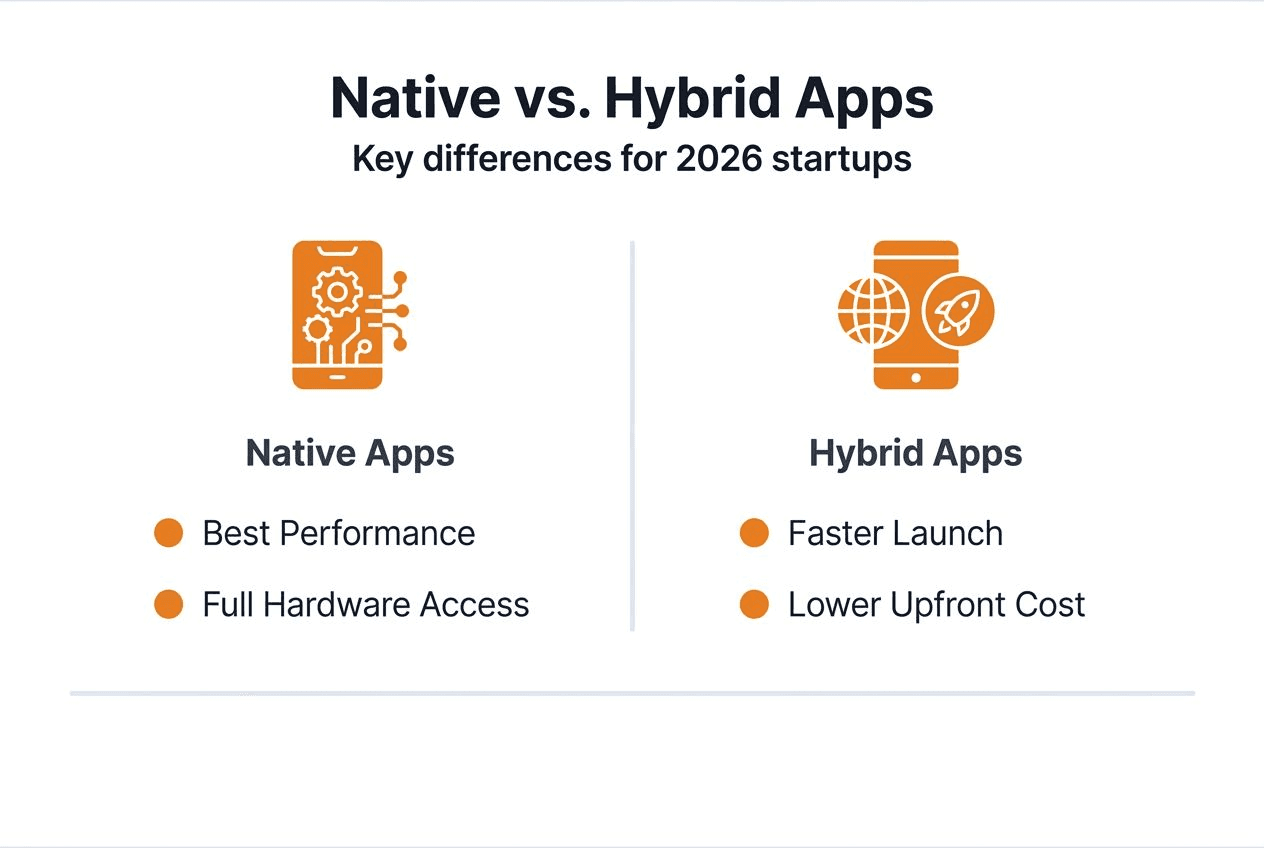
Native apps excel when user experience quality directly impacts business outcomes. They provide unmatched performance under heavy loads and seamless access to evolving device features. The investment in platform-specific development pays dividends through higher retention and user satisfaction.
Hybrid apps suit rapid multi-platform deployment when hardware integration requirements remain modest. Frameworks like React Native or Flutter enable code sharing across iOS and Android. However, developers frequently encounter performance bottlenecks and framework-specific bugs that complicate debugging.
Decision factors for startups include:
Target audience platform preferences and device distribution
Core feature requirements for hardware sensors and offline functionality
Budget allocation between initial development and ongoing maintenance
Timeline constraints and market entry urgency
Long-term scalability and feature expansion plans
Web apps serve specific use cases where installation friction outweighs performance needs. Progressive web apps offer installation and offline features but cannot match native hardware integration. Understanding cross-platform versus native trade-offs helps startups choose the right foundation for sustainable growth.
Practical considerations for startups
Native app development cycles typically range from 8 to 16 weeks depending on feature complexity and scope. Simple apps with standard functionality complete faster, while sophisticated applications requiring custom animations or complex backend integration need extended timelines. Experienced teams using modern tooling consistently deliver within these windows.
Initial costs may exceed hybrid alternatives, but long-term maintenance tends to be more predictable. Native apps experience fewer framework-related bugs and compatibility issues. Updates align directly with platform releases without waiting for third-party framework support. This stability reduces ongoing development costs over the application lifecycle.
Iterative feature releases benefit from native tooling and app store ecosystems. Both Apple and Google provide robust deployment pipelines with staged rollouts and A/B testing capabilities. Teams can ship updates confidently knowing platform-specific testing catches issues before user impact.
Budgeting considerations for startups:
Assess whether you need both iOS and Android or can focus on one platform initially
Factor in costs for specialized Swift or Kotlin developers or agency partnerships
Budget for ongoing maintenance, OS compatibility updates, and feature enhancements
Plan for app store fees, certificates, and third-party service integrations
Include quality assurance and user testing in timeline and cost projections
Scalability advantages include better performance under increasing user loads and seamless access to new device capabilities. Native apps handle growing data volumes and concurrent users more efficiently. As platforms introduce features like widgets, watch apps, or new sensors, native development provides immediate access.
Cost versus value trade-offs to consider:
Higher upfront investment delivers superior user experience and retention
Platform-specific expertise enables faster debugging and optimization
Native apps support premium pricing strategies through enhanced quality
Maintenance costs decrease over time with stable, well-architected codebases
Case studies and real-world examples
A health startup focused on fitness tracking migrated from a hybrid framework to native iOS and Android apps. User session length increased by 35% within three months as improved performance eliminated loading delays and interaction lag. The native implementation enabled advanced sensor integration for heart rate monitoring and motion tracking that hybrid frameworks could not reliably support.
An emerging fintech company reduced crash rates by 40% after rebuilding their mobile banking app using native development. The stability improvement directly correlated with higher app store ratings and reduced customer support tickets. Users reported faster transaction processing and more reliable biometric authentication through native security integrations.
A travel booking platform accelerated feature iteration cycles by adopting native development for their mobile apps. The team shipped updates every two weeks compared to monthly releases with their previous hybrid approach. Direct access to platform APIs simplified integration with calendar apps, location services, and notification features that drive user engagement.
Key outcomes across these startups:
35% increase in user session length through performance optimization and smooth interactions
40% reduction in crash rates improving user satisfaction and retention metrics
50% faster feature release cycles enabling rapid market response and experimentation
Higher app store ratings leading to improved organic discovery and downloads
These startup native app success stories demonstrate tangible business benefits from choosing native development. The investment in platform-specific implementation pays off through measurable improvements in user engagement and operational efficiency. Additional app development case studies showcase how native approaches solve complex technical challenges across industries.
About TouchZen Media native app development services
TouchZen Media specializes in native iOS and Android app development tailored for startups and growing companies. Our experienced teams leverage modern Swift and Kotlin development practices to deliver high-performance applications within realistic timelines and budgets. We understand that startups need both technical excellence and business pragmatism.
Our top app developer California portfolio includes startups across health, fintech, and travel sectors achieving performance and user engagement goals through native development. We provide strategic consulting to help you evaluate whether native development aligns with your business objectives. Our agile project management ensures transparent communication and predictable delivery.
Whether you need native development for one platform or both iOS and Android, our teams bring specialized expertise in platform-specific design patterns and performance optimization. We work collaboratively with startup founders to balance feature ambitions with market realities. Contact us to discuss how native app development can accelerate your mobile strategy with top mobile app development companies recognized for quality and innovation. Learn more about our award winning app development agency approach and explore how we can help build your next mobile application.
Frequently asked questions
What is the main difference between native and hybrid apps?
Native apps are built specifically for one operating system using platform languages like Swift or Kotlin, while hybrid apps use a single codebase for multiple platforms. This fundamental difference affects speed, user experience quality, and device integration capabilities. Native apps consistently deliver superior performance and hardware access.
How long does native app development typically take for startups?
Typical development cycles range from 8 to 16 weeks depending on feature complexity and project scope. Experienced teams using modern IDEs like Xcode and Android Studio can often deliver toward the shorter end of this range. Efficient planning and clear requirements help minimize timeline extensions.
Is native app development always the best choice for startups?
Native apps excel in performance and user experience but require higher upfront investment than some alternatives. Startups with performance-critical features, hardware integration needs, or quality-focused positioning benefit most from native development. Companies prioritizing rapid multi-platform deployment with limited budgets might consider hybrid solutions initially.
Can startups afford to build separate native apps for iOS and Android?
Many startups successfully launch on one platform first, then expand to the second after validating market fit and generating revenue. This phased approach manages costs while maintaining native quality standards. Shared architecture patterns and business logic reduce duplication when building the second platform.
What ongoing costs should startups expect with native apps?
Ongoing costs include OS compatibility updates, bug fixes, feature enhancements, and app store fees. Native apps typically require less framework-related maintenance than hybrid alternatives, making long-term costs more predictable. Budget for quarterly updates aligning with major OS releases and continuous performance monitoring.